Travel has changed. It’s faster, more global, and more unpredictable than ever before. Travelers today expect not just financial protection, but real support—anywhere in the world, at any time. In response, travel insurance companies have evolved significantly. They now offer 24/7 assistance, coordinate care across borders, and manage everything from hospital admissions to emergency evacuations.
There’s no question—modern travel insurance delivers real value.
But there’s also a gap that continues to show up in real-world situations. And it appears at the exact moment when everything matters most.
Where Coverage Ends and Real-World Challenges Begin
In a medical emergency abroad, care doesn’t wait for insurance verification. Doctors need immediate access to critical information—medical history, allergies, medications, and pre-existing conditions. Yet most travelers don’t have this information readily available. It’s often scattered across different providers, systems, or simply not documented in a way that can be quickly shared. Nearly 30% of adults report difficulty transferring their health records between providers , and that challenge becomes even more pronounced when someone is in a foreign country, under stress, and possibly unable to communicate.
Even when insurance teams step in quickly, the first phase of care often happens with incomplete information. Hospitals may rely on assumptions, delayed inputs from family members, or fragmented details gathered in real time. Add language barriers into the mix, and the situation becomes even more complex. The World Health Organization has consistently highlighted how communication gaps contribute to unsafe care globally—something that becomes especially relevant in international travel scenarios.
This is not a failure of travel insurance. It’s a limitation of the system. Insurance is designed to cover costs and coordinate logistics—but it depends on information that isn’t always available when needed.
This is where BlueRed fits in.
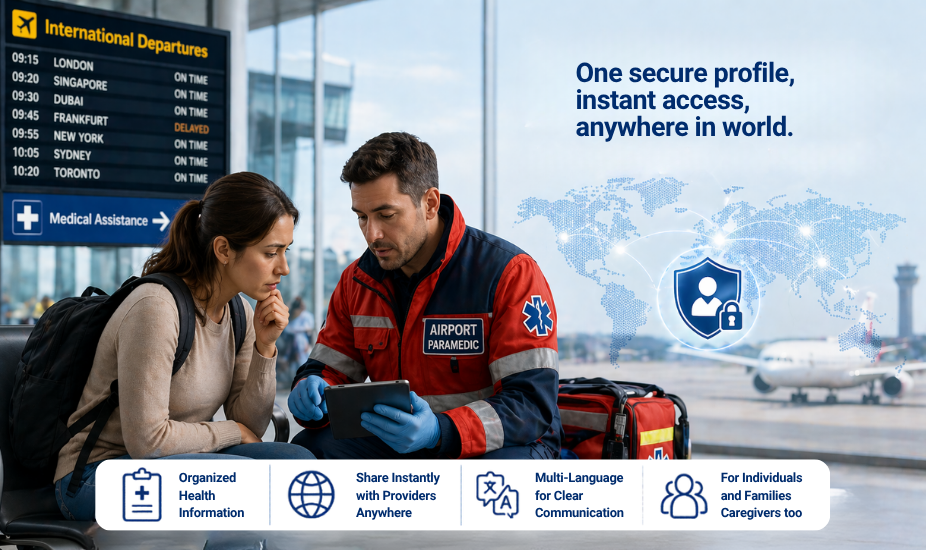
BlueRed is not a replacement for travel insurance. It complements it. By giving individuals and families a secure, centralized place to store and access their health information, BlueRed ensures that essential data is available instantly—anywhere in the world. Whether it’s a list of medications, known allergies, past procedures, or emergency contacts, this information can be retrieved and shared in seconds.
One of the most powerful aspects is its ability to present this information in multiple languages. In situations where a traveler cannot communicate effectively with local healthcare providers, having their medical information translated and structured can significantly reduce delays and improve the quality of care. It also supports families and caregivers who are managing multiple profiles, ensuring that everyone’s information is organized and accessible when needed.
Turning Travel Protection into True Preparedness
For travel insurance companies, this represents an opportunity—not just to enhance their offering, but to strengthen outcomes. When accurate health information is available from the start, care coordination becomes faster, decisions become more informed, and the overall experience improves for both the traveler and the insurer. It reduces friction in the process and helps bridge the gap between emergency response and effective treatment.
As the travel industry continues to evolve, expectations will only grow. Travelers are no longer looking for coverage alone—they are looking for confidence. They want to know that if something goes wrong, they won’t just be supported financially, but also prepared in a way that makes care seamless and effective.
That’s the shift that’s happening now.
Travel insurance has already moved beyond claims. The next step is making sure travelers are truly ready—before anything happens.